Run your fuel station the way a finance team would.
Petro is the operating system for Sri Lankan fuel stations. Shifts, dip readings and pumper payroll on the forecourt, a real accounting core in the office, and one set of numbers shared between them.
No obligation. Or call +94 76 666 5382 and talk to a person.
Six parts of the job, one system
Six modules sharing one customer record, one ledger and one set of fuel figures. Nothing to export between them, because there is nothing to export to.
For the owner
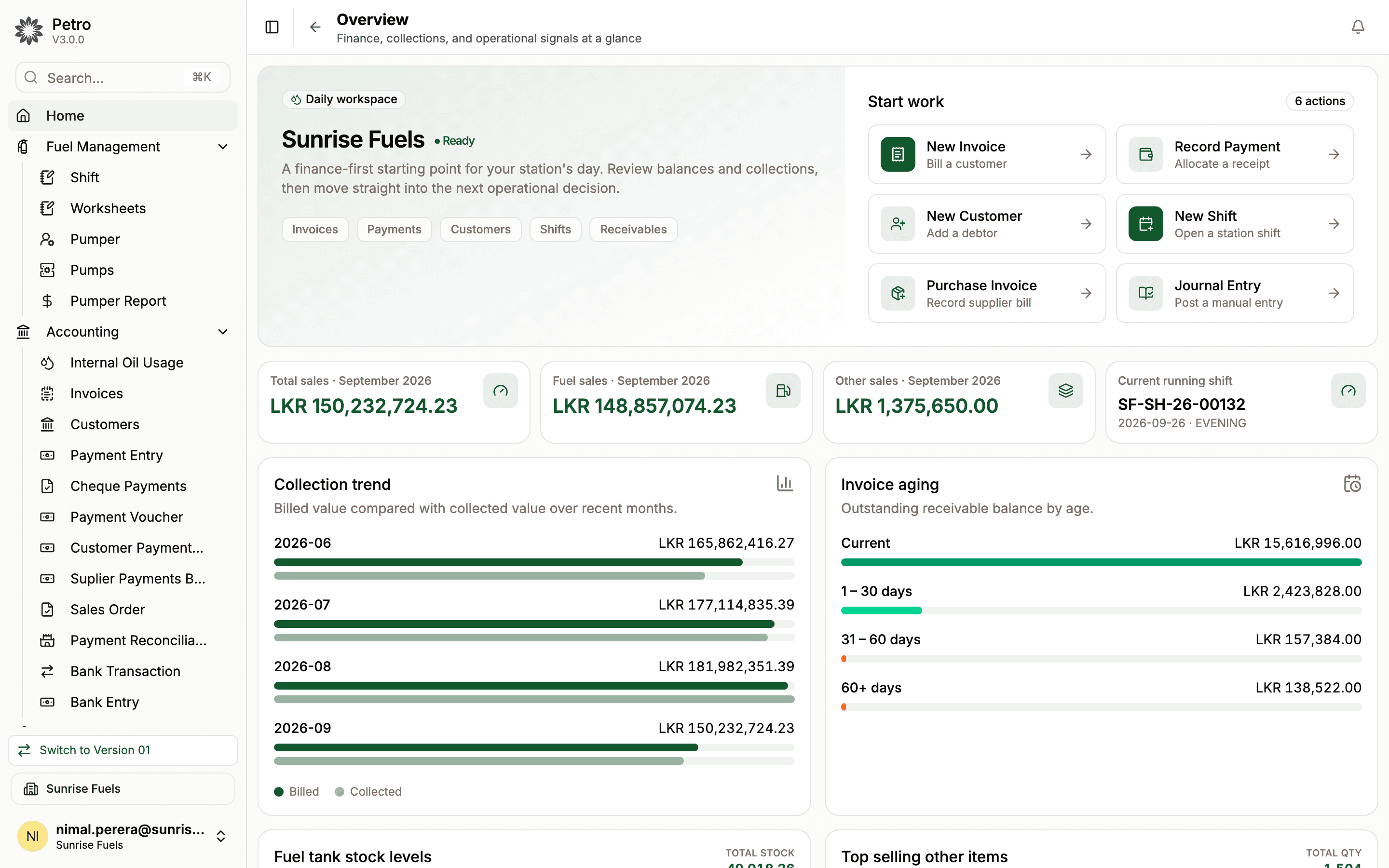
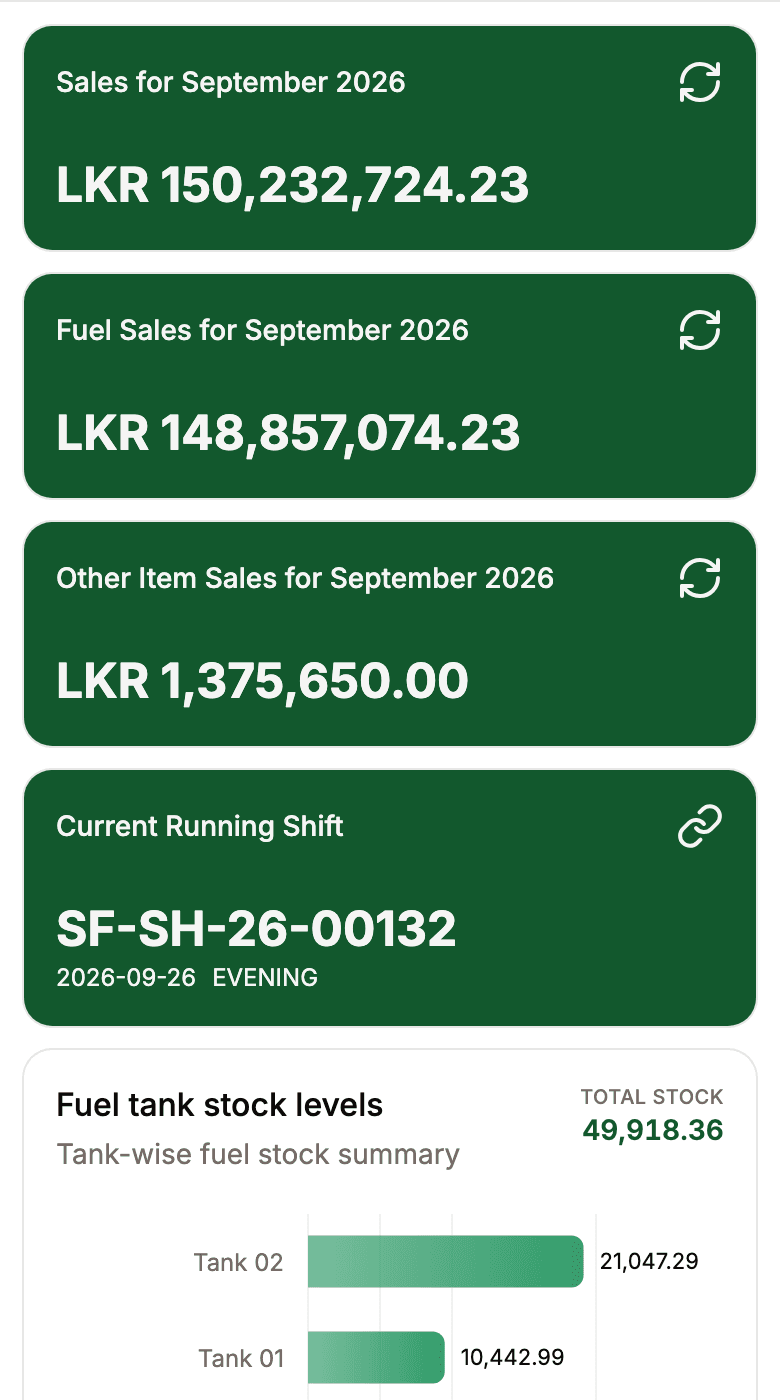
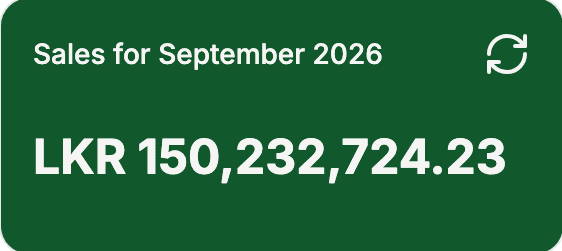
Live operations dashboard
Total sales, fuel against non-fuel, collections and the current shift on one screen, updating as the pumps run.
ExploreFor the forecourt
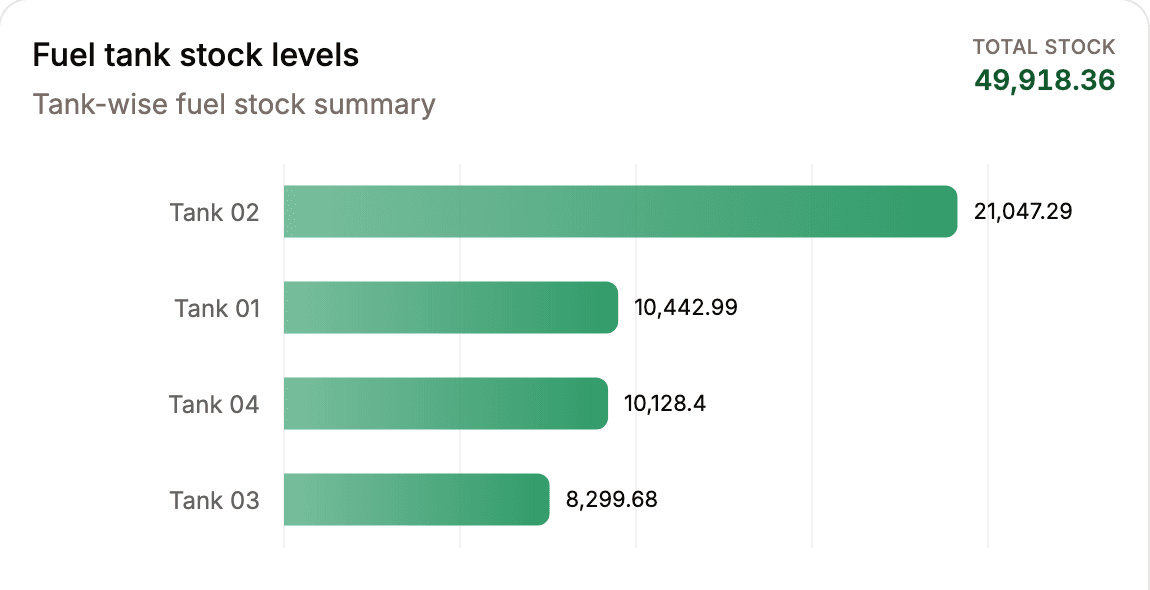
Dip readings and fuel stock
Every tank tracked dip by dip, so shrinkage surfaces the day it happens instead of at the end of the month.
ExploreFor the shift lead
Shifts and reconciliation
Open a shift, assign pumpers, close it against counted cash. Petro flags the variance before anyone goes home.
ExploreFor the office
Pumper payroll and advances
Salaries, advances, excess payments and outstanding balances settled against a running ledger per pumper.
ExploreFor the counter
POS, invoicing and credit
Fuel-optimised billing, a general POS for the mart, customer credit limits and instant invoice printing.
ExploreFor finance
Accounting and reconciliation
A real chart of accounts underneath everything, with statement upload, auto-matching and an audit-ready ledger.
Explore
A fuel station is a finance business that happens to sell fuel
Margin per litre is set by someone else. What you actually control is shrinkage, credit and cash discipline, and all three are accounting problems wearing overalls.
A finance core, not a till with reports bolted on
Most station software starts at the pump and tries to reach the books later. Petro starts at the chart of accounts, so a fuel sale, a pumper advance and a bank deposit are all just entries that have to balance. That is why the numbers agree at month end.
The forecourt and the office share one record
Dip readings, shifts and pumper balances sit in the same system as the P&L, receivables and reconciliation. No exports, no re-keying, no quiet disagreement between what the station says and what the accountant says.
Built for Sri Lankan stations specifically
VAT-ready reporting, co-op and consolidated network reporting, rupee-denominated everything, and workflows shaped around how shifts, credit customers and pumper advances actually work here.
One platform instead of five subscriptions
Operations, POS, inventory, payroll and accounting in one place, sharing one customer record and one ledger. Nothing to reconcile between vendors, because there is only one.
Inside Petro
The three moments where stations lose money
Day end, credit and stock. Real screens from the product, shown with a demo station's figures.
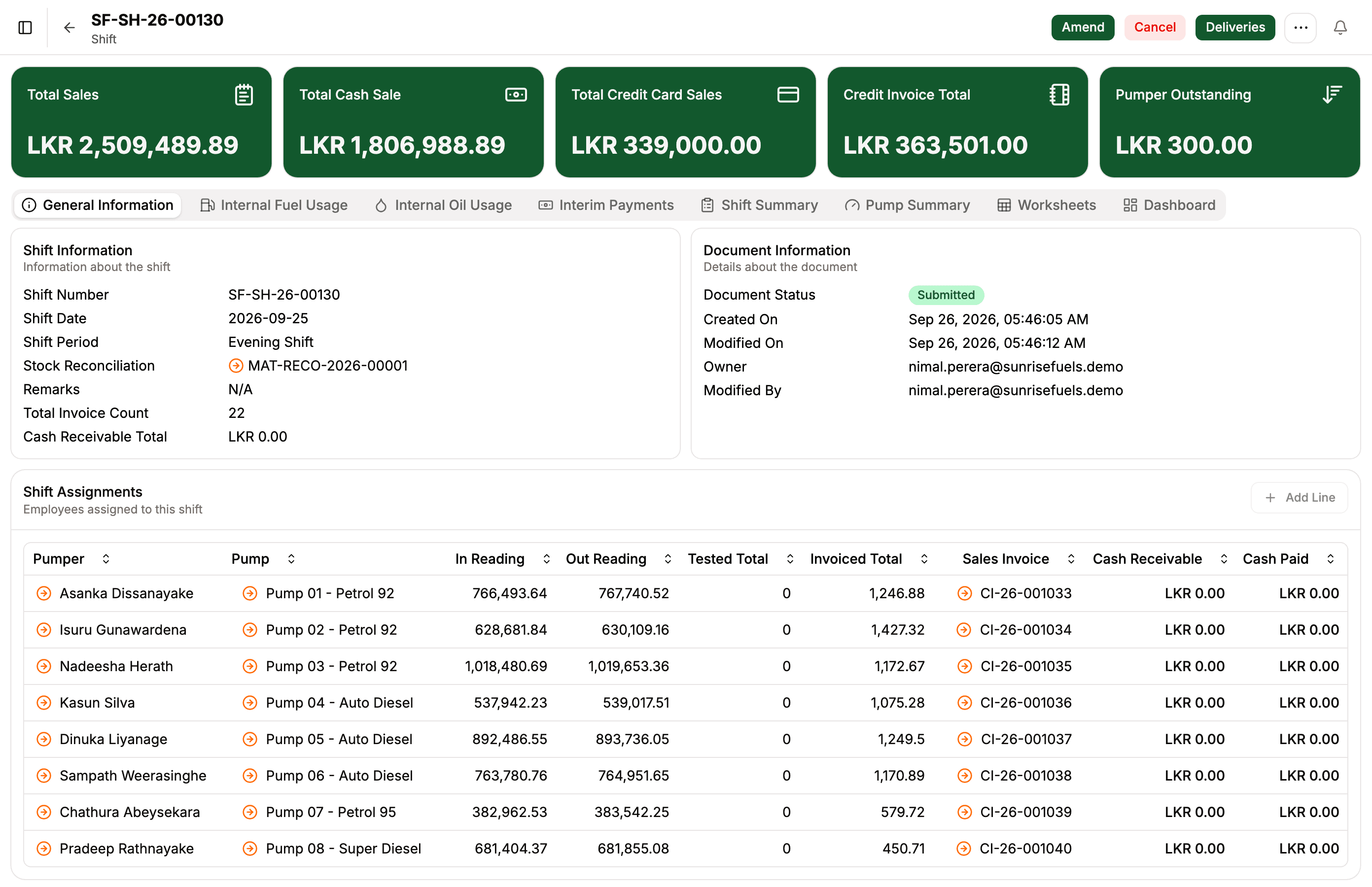
The shift closes itself, and tells you where it is short
Nozzle readings, dips and counted cash meet in one screen. Petro does the arithmetic your manager used to do with a calculator at nine at night.
- Per-pumper sales against cash handed in
- Variance posted to the right advance balance
- Nothing closes until the numbers agree
Know what every account owes before you pour another litre
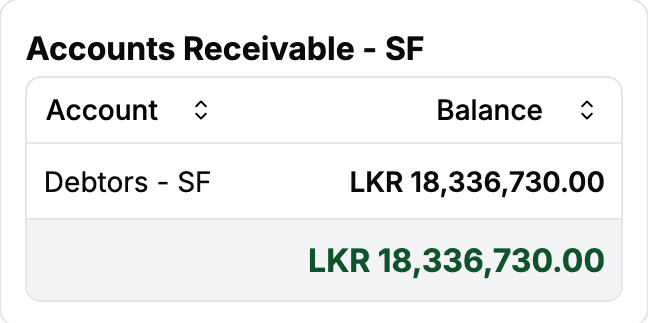
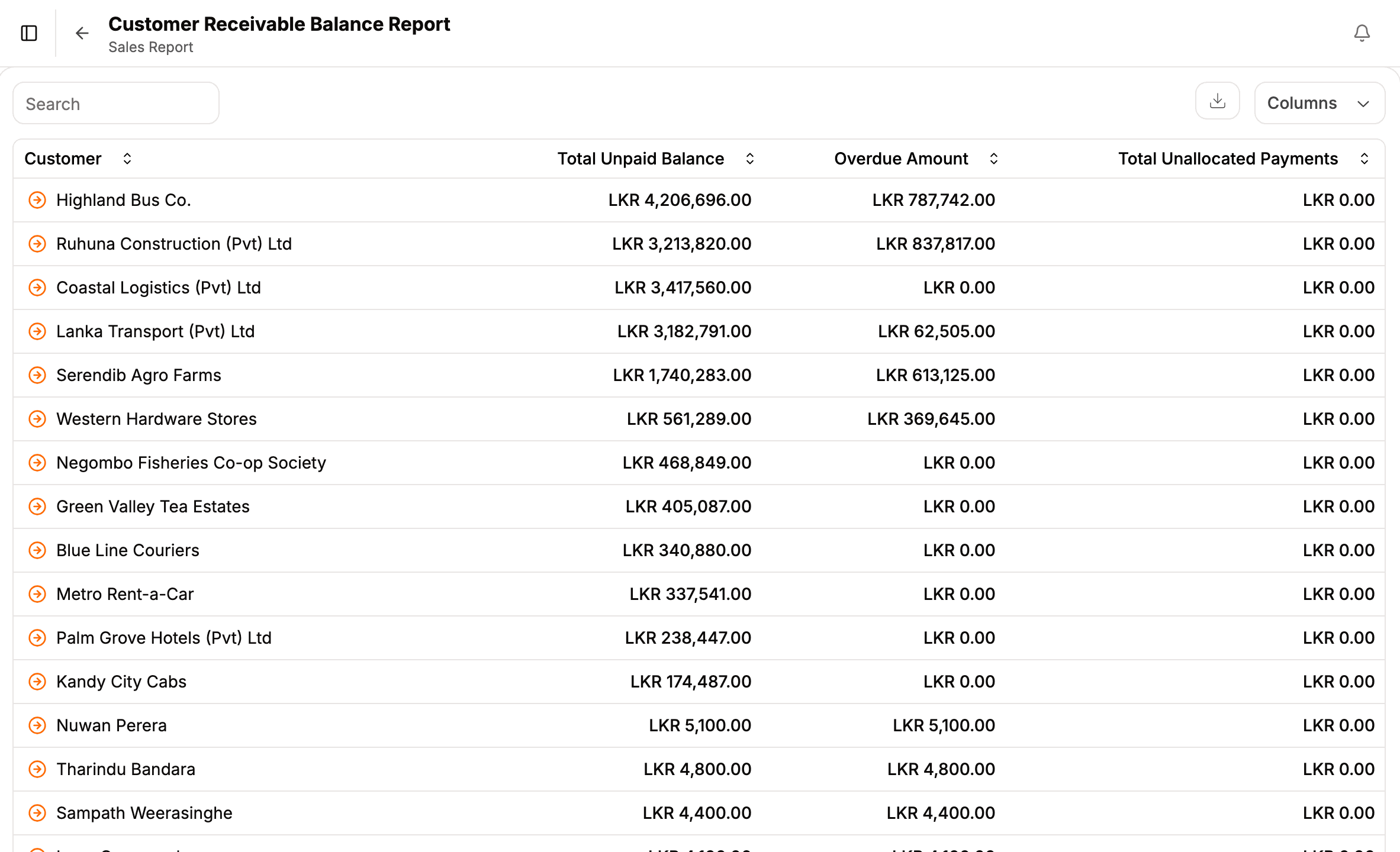
Credit customers are where fuel margin quietly disappears. Petro keeps aging, limits and ledgers next to the forecourt data instead of in a separate book.
- Aging by account, from current to ninety days past due
- Credit limits enforced at the point of billing
- Statements and receipts from the same ledger
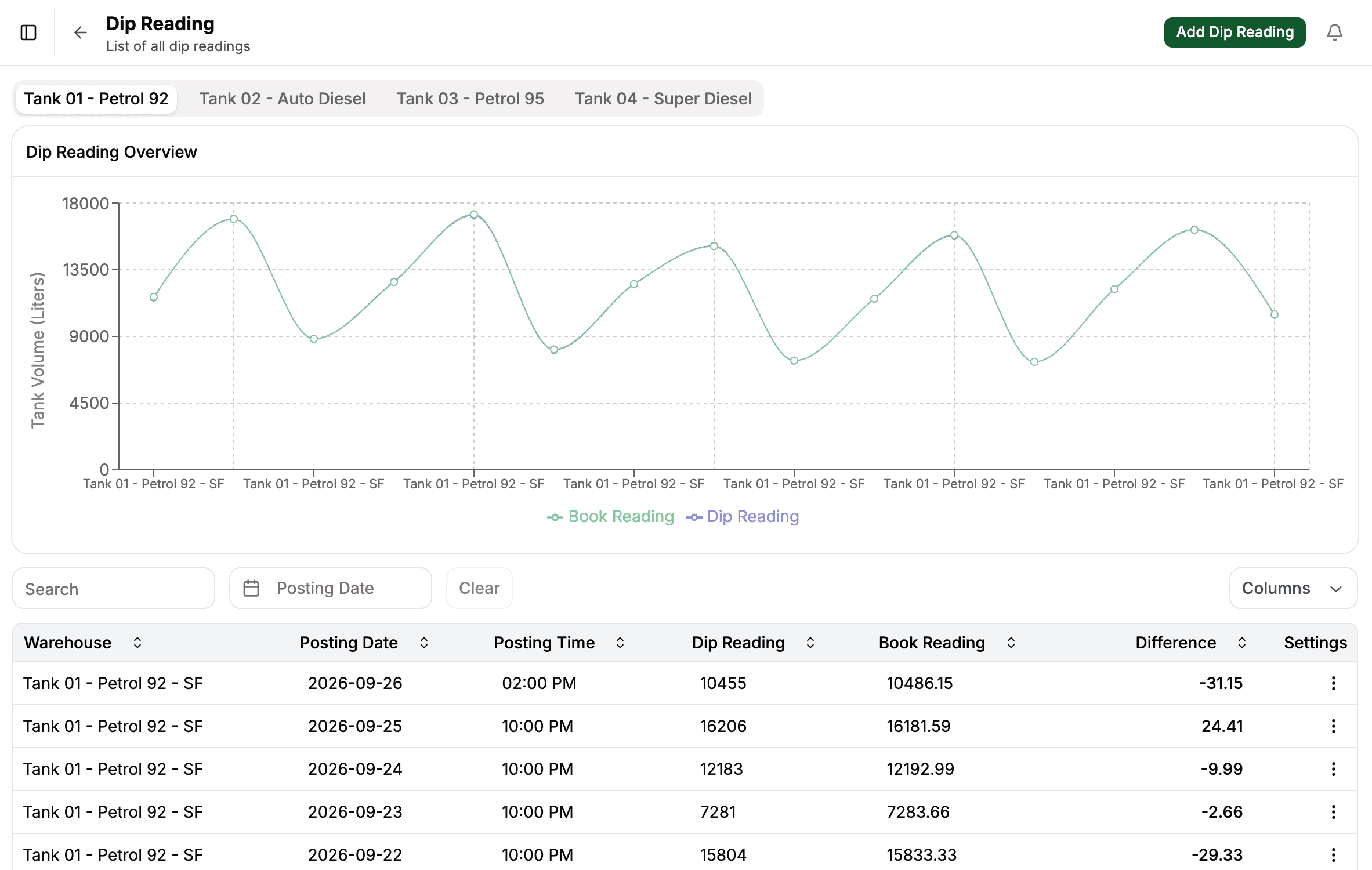
Catch shrinkage the day it happens, not at month end
Every tank is dipped and set against its book balance. Petro plots the two side by side, so a leak, a short delivery or a drifting meter shows up as a difference you can see the same day.
- Dip against book, tank by tank, every day
- The difference in litres on every reading
- A trend per tank, so drift stands out
From the forecourt to the office, one set of numbers
What a pumper records at the nozzle is what the accountant sees at month end. No retyping in between.

Pump 02 · Petrol 92, one shift
1,858.48 L
Nozzles, dips and shifts, captured as they happen
Credit invoice, Auto Diesel
LKR 67,334.19
Every litre billed, cash or credit

Bank account balance
LKR 29,147,973.00
The same figures, already in the ledger
Every decision, backed by a number
Thirty-plus reports ship with Petro, from a single day-final to a consolidated co-op network view. These are the ones owners open most.
Explore the reportsFinance
- Profit and loss statement
- Bank reconciliation
Fuel and stock
- Fuel day-final report
- Fuel stock balance
Sales and credit
- Accounts receivable aging
- Mode of payment summary
People and network
- Pumper salary and advances
- Co-op network report
Who it is for
One platform, tuned to how you trade
The numbers a fuel station lives by, in one place
Getting started
Rollouts go wrong for boring, predictable reasons
Almost always the same three: the opening balances were never clean, the credit and commission rules only lived in somebody's head, and the old process was switched off too early. We start with all three.
- 1
We load your data
Tanks, pumps, nozzles, products, customers and opening balances go in first. You see your own station in Petro before you commit to anything.
- 2
We agree the rules
Credit limits, pricing, pumper commission and the chart of accounts get written down, often for the first time. This is the step that decides how the rollout goes.
- 3
Run one shift for real
A single shift is billed, closed and reconciled in Petro while the old process keeps running beside it. Nobody is trusting new software with the whole day yet.
- 4
Move at your pace
Fuel first, then the mart, then payroll and accounts. Turning the old process off before your team is ready is how these projects fail, so we do not.
Built alongside the people who close the day
Every feature in Petro started as somebody's day-end headache.
Day end used to take two hours and a calculator. Now the shift reconciles itself and I see the variance before the pumpers leave.
Station manager
Independent fuel station
Pumper advances and excess payments were a constant argument. Every rupee is tracked against a name now, and payroll disputes have basically stopped.
Operations lead
Multi-pump retailer
Having the P&L, receivables and bank reconciliation in the same place as the forecourt data changed how we run the business.
Finance controller
Fuel co-operative
Representative of operator feedback. Names withheld on request.
FAQ
Questions, answered
What operators usually want to know before they book a demo.
Yes. Dip readings, shifts, pumper payroll, fuel reconciliation and tank-wise stock are core features, not add-ons on top of a generic ERP. It is a finance-first platform tuned to how fuel stations actually operate.

See Petro running on your own numbers
Tell us how many pumps you run and how you close the day today. We come back with a walkthrough built around your station, not a generic demo tenant.
No obligation. We reply within one working day.